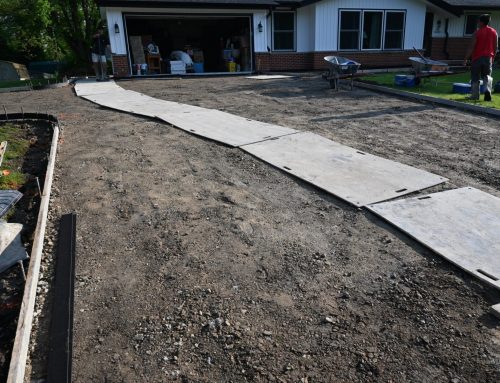

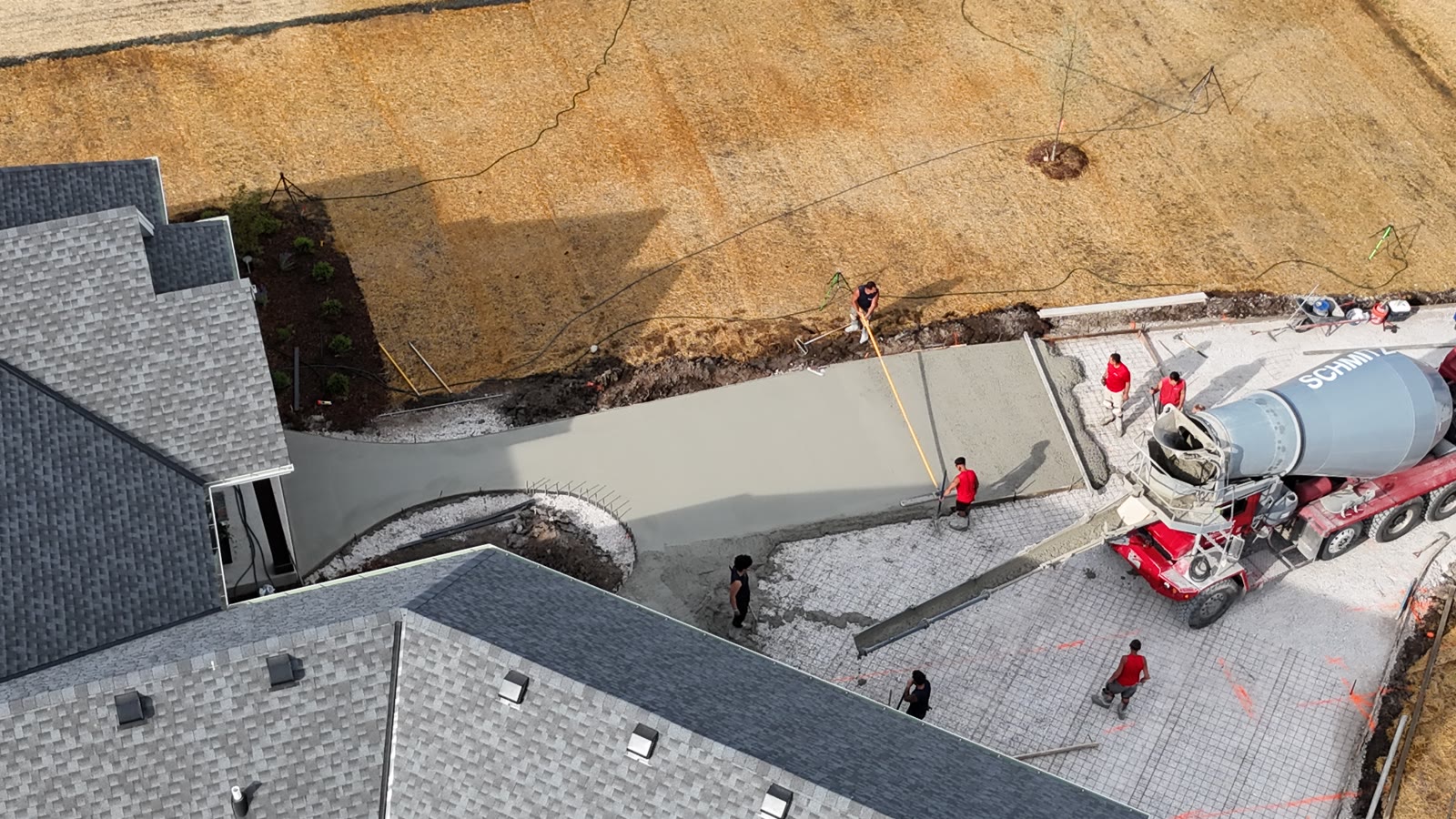
If two concrete areas connect, you do not automatically need to replace both at the same time. The better question is whether keeping one section will limit the layout, drainage, elevation, or finished look of the new concrete.
For homeowners in Milwaukee and surrounding area communities, connected concrete often includes a driveway meeting a front walk, a patio leading into a walkway, or a driveway connecting to the garage. Wisconsin weather makes those transitions worth looking at closely. Repeated freezing and thawing, snowmelt, drainage, and ground movement can affect adjoining areas differently over time.
At JBS Construction, we look at how the spaces work together before settling on the project scope. Sometimes replacing several connected sections at once is the practical choice. In other cases, good existing concrete can stay in place while the worn section is replaced.
When Should Connected Concrete Be Replaced Together?
Replacing adjoining concrete areas at the same time usually makes the most sense when both sections are aging, their elevations no longer line up well, or one section limits what can be done with the other.
Consider a driveway that meets an older front walkway. If the driveway needs full replacement but the walkway sits noticeably higher, lower, or at an awkward angle, that existing section becomes part of the planning conversation. Keeping it may still work, but it could affect how smoothly the new driveway connects to the rest of the property.
The same issue can come up when:
- A driveway meets the garage entrance
- A front walk connects to driveway concrete
- A patio leads directly into a walkway
- Several walkway sections meet near an entry
- A parking area connects to an existing driveway
- Adjoining slabs send water toward the same low area
When more than one section already needs replacement, completing them as one project can make it easier to coordinate the slopes, joints, transitions, and overall layout.
That is different from replacing extra concrete simply because it touches the project. Condition and function should drive the decision.
A Good Slab Does Not Need to Come Out Just Because the Next One Does
One of the most useful things homeowners can know is that connected slabs do not have to be the same age.
If an adjoining walkway, patio section, or other slab is still in good condition and works with the elevation of the new concrete, there may be no practical reason to replace it.
For example, you may have an older driveway that is ready for replacement while the walkway installed several years later still looks good, drains properly, and meets the driveway at a comfortable height. In that situation, the walkway may be able to stay.
JBS also installs new concrete beside existing slabs when the site conditions make sense. The existing slab, surrounding grade, intended use, and drainage all need to be considered before another section is added.
A useful way to think about the decision is this:
Will keeping the existing concrete make the new section harder to grade, drain, use, or connect properly?
If not, leaving it alone may be the better use of the project budget.
Pay Attention to the Transition, Not Just the Individual Slabs
Homeowners naturally look at each concrete surface separately. A contractor also has to look at the point where those surfaces meet.
That transition can affect daily use more than you might expect.
A small height difference between a driveway and walkway may feel awkward every time someone crosses it. A patio that meets an older path at the wrong elevation may leave a noticeable lip. A driveway replacement that ends at an existing section with a different slope may create a transition that feels abrupt.
These details are easier to solve before installation starts.
JBS handles a range of concrete services for homeowners throughout the Milwaukee area, including driveways, patios, walkways, garage floors, and other residential concrete projects. Looking at how these spaces connect can help determine whether one section should stay or several should be replaced together.
Drainage Can Be the Deciding Factor
Drainage is one of the strongest reasons to consider several adjoining concrete areas together. Every slab has an elevation and slope. When one section changes and the other stays, the remaining concrete can affect where water goes.
Imagine replacing a driveway that currently meets an older sidewalk near the house. If that sidewalk sits at an elevation that limits the available driveway slope, we need to know that before the new layout is finalized. The same issue can happen when a patio connects with a side walkway or another concrete pad.
Milwaukee-area properties also deal with snow accumulation, snowmelt, spring rain, and repeated freeze-thaw cycles. Water that repeatedly settles near an edge or transition can become especially noticeable during winter.
The WisDOT standards provide a useful example of how concrete transitions and joints are planned where different paved surfaces meet. Residential concrete projects are different from roadway work, but the same basic principle applies: the connection between two sections matters.
Think About What Will Happen Five Years From Now
One of the less obvious questions is whether an adjoining section is likely to become the next project shortly after the current one is finished. Suppose your driveway needs replacement now, and the connected front walkway is showing significant age as well. Leaving the walkway may lower the scope today, but you could end up coordinating another concrete project a few years later.
That does not mean the walkway automatically belongs in the current project. It does mean its remaining useful life is worth discussing. On the other hand, if the adjoining concrete was installed more recently and is still functioning well, replacing it early may offer little practical benefit. This is where a site-specific conversation matters more than a simple rule such as “replace everything together.”
Appearance Matters, but Matching Old and New Concrete Has Limits
New concrete and older concrete rarely look identical.
An existing slab has spent years exposed to sunlight, rain, dirt, snow, deicing materials, and daily use. Freshly placed concrete has not. Even when the slabs sit directly beside one another, some difference in appearance should be expected.
Replacing several areas during the same project can create more visual consistency when that matters to the homeowner. It may also make joint lines, curves, edges, and connected layouts feel more intentional. But appearance alone does not always justify removing concrete that is still working well. The better goal is for the finished project to look planned, even when some existing concrete remains.
Could Replacing Several Areas Improve the Layout?
Sometimes replacement creates an opportunity to rethink how the property works rather than simply recreate the old footprint.
A driveway might benefit from a better connection to the front walk. A patio replacement could include a more useful walkway to the driveway or side yard. An awkward transition between concrete areas might be simplified when both sections are part of the same project. That is especially relevant for older properties where concrete may have been added in stages over many years.
Looking at the full property can reveal opportunities that are easy to miss when the project is viewed as one rectangle of concrete. You can also review JBS project examples to see how different concrete areas can fit together around a home.
Questions to Ask Before Replacing Adjoining Concrete
Before deciding whether to replace one slab or several, look at the areas together and ask a few practical questions.
- Is the adjoining concrete still in good condition?
- Do the surfaces meet at a comfortable height?
- Does water drain away from the house and garage?
- Would the old slab limit the slope of the replacement?
- Are there lips or awkward transitions between areas?
- Does the current layout work for how you park and walk through the property?
- Is another connected section likely to need replacement soon?
- Would changing both sections create a more useful layout?
Those answers usually tell you more than the age of the concrete alone.
They can also help you separate work that makes sense to complete now from work that can reasonably wait.
Plan Connected Concrete as Part of the Whole Property
Connected concrete does not always need to be replaced at the same time. A solid adjoining slab that drains properly and works with the new elevation may have no reason to come out. When multiple surfaces are aging, poorly aligned, affecting drainage, or likely to need replacement within a similar timeframe, handling them together may create a cleaner and more practical project.
For homeowners in Milwaukee and surrounding area communities, JBS Construction can review how your driveway, patio, walkways, garage entrance, and surrounding grade interact before the project begins.
We focus on new concrete installation and full replacement, so the conversation is about what actually makes sense for your property rather than adding work simply because two slabs happen to touch.
Contact JBS Construction for a free estimate and talk through which concrete areas make sense to replace now and which ones can stay.