
Removing old concrete sometimes answers a question you could not answer from the surface: what has been happening underneath it?
Once an old driveway, patio, or walkway comes out, we may find areas where the soil or existing base is soft, loose, uneven, or otherwise not ready for new concrete. When that happens, it needs attention before the next slab is poured. New concrete depends on the material below it for consistent support.
For homeowners in Milwaukee and surrounding area, this is an important part of concrete replacement. Freeze-thaw cycles, drainage, previous construction, and years of soil movement can all affect what we find once an older slab is gone. It is one reason we look at the condition of the site, not just the concrete you can see.
What Can Be Hiding Under an Old Concrete Slab?
An older slab does not tell you exactly how the area below it was prepared. A driveway may have been installed over a solid base in most areas but have one section where the material underneath settled differently. Fill may have been placed during earlier construction. Water may have moved through one part of the site differently than another. In other cases, the base simply may not have been compacted well when the original concrete was installed.
JBS has seen how soil conditions matter in concrete work. Our concrete replacement work includes situations where concrete has sunk because the soil underneath shifted or was not properly compacted. Those conditions can become much easier to see after demolition.
Possible signs include areas that feel noticeably softer than the surrounding ground, loose material below one section of the slab, uneven base depths, or spots where moisture appears to be collecting. Each project is different, so finding one questionable area does not automatically mean the entire site has the same problem.
What Happens After Removing Old Concrete Reveals a Soft Area?
The next step is to determine how much of the project area is affected. If the questionable material is limited to one location, that area may require additional preparation before the new concrete goes in. If poor conditions extend across a larger portion of the site, more preparation may be necessary.
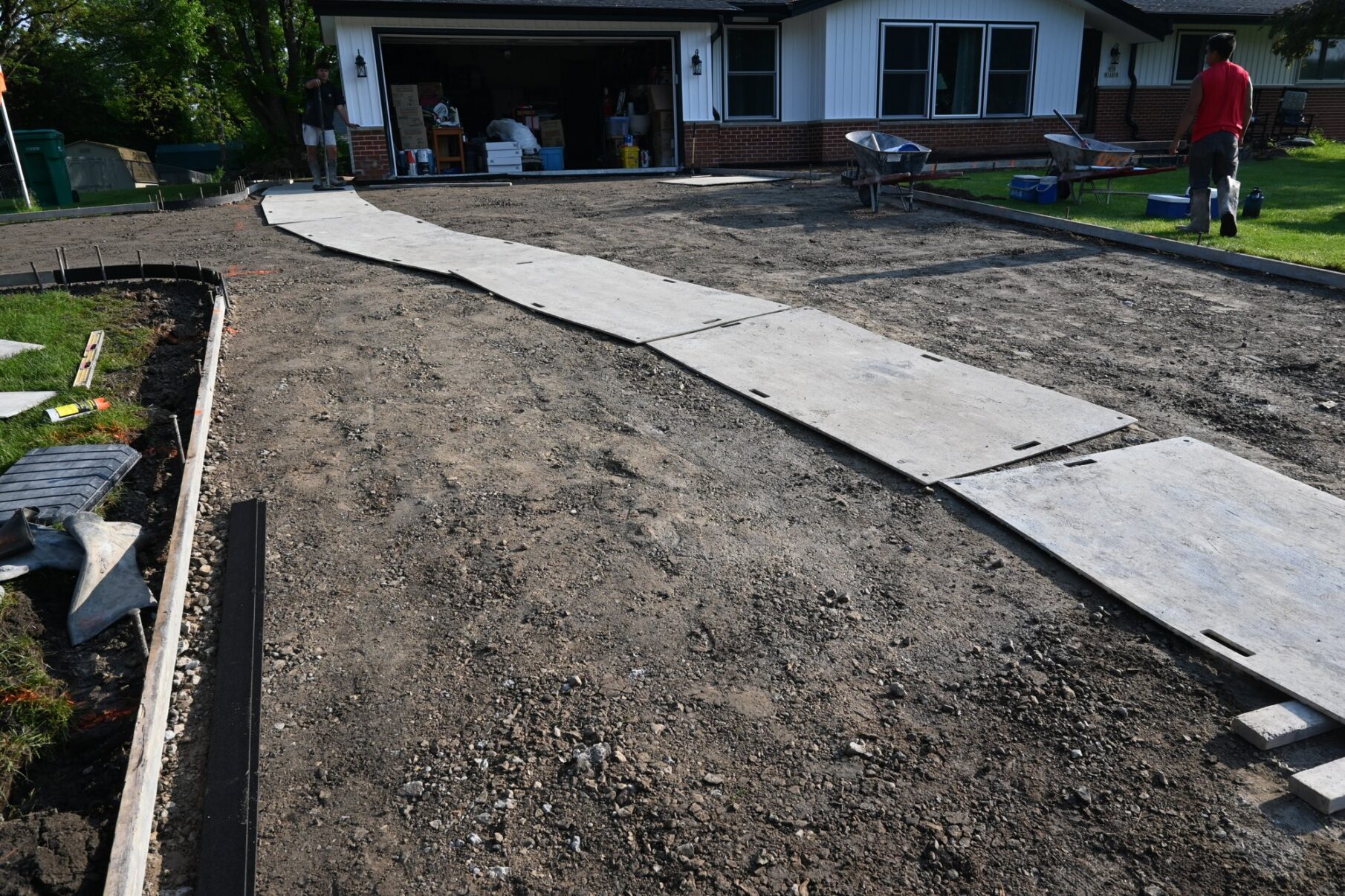
The goal is to create a suitable, consistent base for the new slab rather than pour over a problem that has already become visible. That can involve removing unsuitable material, adding appropriate base material, grading the area, and compacting it as needed for the project. The exact preparation depends on what is found and how the space will be used.
This is an important distinction for homeowners comparing concrete estimates. Removing an old driveway is one part of the job. Understanding what is underneath it and preparing the area for the replacement is another. Our concrete services account for the preparation that happens before the finished surface takes shape.
Why Does Soil Support Matter So Much?
Concrete is strong, but the slab still relies on what sits below it. If one section has firm support and another sits over loose or unstable material, the slab may not be supported uniformly. Soil movement and poor installation are among the factors JBS identifies as possible causes of cracking or sinking in residential concrete.
Industry guidance also treats the subgrade and soil-support system as important parts of slab construction. The American Concrete Institute discusses the relationship between concrete slabs and the supporting soil beneath them in its ACI guidance.
For a homeowner, the practical point is simple. Good preparation happens before the concrete truck arrives.
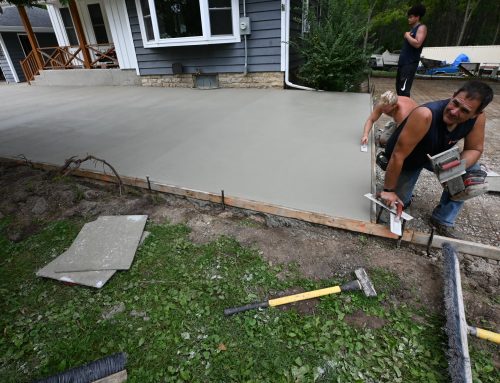
A clean, newly finished surface can hide what is below it. That makes the work completed during excavation, grading, and base preparation especially important. Once fresh concrete is installed, those parts of the project will no longer be visible.
Can You Know the Soil Is Bad Before Demolition?
Not always. There may be clues before removing the slab. A section that has noticeably sunk, tilted, or settled differently from the surrounding concrete can suggest that something has changed below it. Drainage patterns around the driveway or patio can provide more information about the site as well.
But an existing slab still covers the ground underneath it. That means some conditions simply cannot be seen during an initial walkthrough. Demolition gives us a much better look at the full project area and allows us to respond to the conditions that are actually there.
This is particularly relevant when replacing concrete that has been in place for many years. The homeowner may have no record of how deeply the site was excavated, what material was placed underneath it, or how the original base was prepared.
Finding those conditions during removal is better than discovering their effects after new concrete has already been installed.
Does Bad Soil Mean the Whole Project Has to Change?
No. A problem beneath one portion of an old slab does not automatically mean there is a problem everywhere. The location and extent of the issue matter.
For example, an isolated area near the edge of a driveway may require a different amount of preparation than poor support extending across a large section. Site access, grade, drainage, and the type of concrete being installed can also affect what needs to happen next.
This is where a site-specific evaluation matters more than a standard answer. At JBS, we work on concrete driveways throughout southeastern Wisconsin, and each property comes with its own layout and existing conditions. An older Milwaukee-area property may present a very different starting point than a newer home with a recently graded lot. The preparation should respond to the property rather than follow a one-size-fits-all assumption.
Why This Discovery Can Actually Be Useful
Nobody wants an unexpected condition to appear during a home project, but removing an old slab is the right time to find a problem underneath it. At that point, the old concrete is already out of the way. The base is exposed, and the condition can be evaluated before new concrete covers it again.
That information can also help explain what happened to the previous slab. If one part of an old driveway had settled lower than the rest and demolition reveals poor support in that same area, the project now has useful context. Instead of treating the uneven surface as an isolated cosmetic issue, attention can be given to the area underneath it before the replacement is installed.
That is the kind of detail homeowners may never see in the finished photos, but it can be an important part of the work.
Removing Old Concrete Gives Us a Better Look at the Whole Project
Removing old concrete is about more than clearing space for a new driveway, patio, walkway, or slab. It also gives us the chance to see what the previous concrete was sitting on.
If we uncover soft soil, loose material, inconsistent support, or another concern, that information becomes part of planning the new installation. The goal is to address visible site-preparation needs before new concrete goes down rather than ignore what demolition has revealed.
For homeowners in Milwaukee and the surrounding area, JBS Construction brings more than 30 years of concrete experience to new installations and concrete replacement projects. If you are planning to replace aging concrete and want to understand what the project may involve from removal through the new pour, contact JBS Construction for a free estimate.