
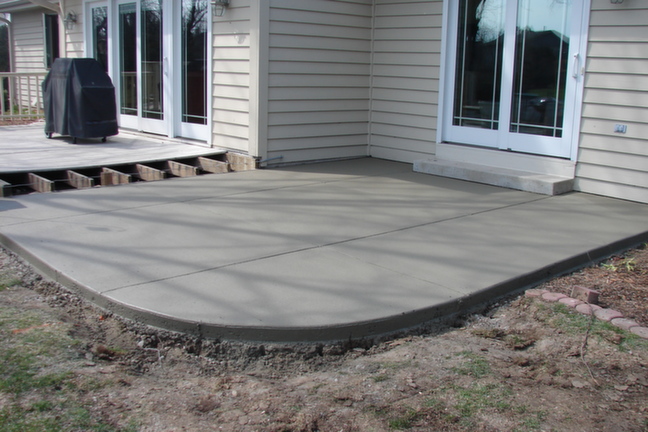
A backyard patio should feel solid under your feet. If a slab cracks, sinks, or pulls away from the home, it can make the space harder to use and less enjoyable. For Milwaukee homeowners, this matters even more because patios have to deal with heavy rain, snow, ice, and freeze-thaw cycles.
At JBS Construction, we build concrete slabs for patios with the details that matter from the start. A good patio is not just concrete poured on the ground. It takes planning, base prep, drainage, proper joints, and the right finish for your yard and how you plan to use the space.
How Are Concrete Slabs for Patios Built To Resist Cracking and Shifting?
Concrete slabs for patios are built to reduce cracking and shifting by starting with a stable base, using proper slope for drainage, placing the right concrete mix, and cutting control joints in planned locations. No outdoor concrete slab can be promised to never crack, but good installation helps control movement and limits random cracking. In Milwaukee, freeze-thaw conditions make base preparation and water control especially important.
Why Do Patio Slabs Crack or Shift?
Concrete moves as it cures, dries, and reacts to changes in temperature. That movement is normal. Problems happen when the patio has no good place to move, when the ground below it settles, or when water sits under or around the slab.
A patio slab can crack or shift when:
- The soil below the patio was not prepared well.
- The gravel base is too thin, uneven, or poorly compacted.
- Water drains toward the patio instead of away from it.
- The slab is tied too tightly to steps, walls, or other concrete.
- Control joints are missing, too shallow, or placed in poor locations.
- The patio was poured in weather that made finishing or curing harder.
Milwaukee weather adds another layer. Water can get into the ground below or beside the patio. When that water freezes, it expands. When it thaws, the ground can settle again. A patio built with proper drainage and base prep is better prepared for that movement.
How Does the Base Keep a Concrete Patio Stable?
The base is one of the most important parts of a patio slab, even though you do not see it after the project is done. A strong concrete patio starts below the surface.
Before the slab is poured, the patio area needs to be excavated to the right depth. Soft soil, roots, organic material, and unstable areas need to be addressed. From there, a compacted stone base gives the slab a more stable surface to sit on.
The goal is to create a patio base that drains well and supports the concrete evenly. If one section settles more than another, the slab is more likely to crack or shift. This is why base prep is not a step to rush.
For many Milwaukee-area homes, this is especially important near downspouts, older landscaping beds, shaded yards, and areas where water tends to collect after rain. A patio that looks simple from above may need more careful prep below.
Why Do Drainage and Slope Matter So Much?
Water is one of the biggest reasons outdoor concrete has problems over time. A patio should be sloped so water moves away from the home and off the slab.
A good slope helps reduce puddling on the surface. It also helps limit the amount of water that sits near the patio edges. That matters during winter because standing water can freeze, thaw, and refreeze many times.
Drainage planning may include:
- Sloping the slab away from the house
- Checking how gutters and downspouts release water
- Looking at nearby lawn grades
- Planning the patio shape around the yard’s natural drainage
- Avoiding low spots where water can sit
A patio should fit the yard, not fight against it. During planning, we look at how the space is used and how water already moves through the property. That helps us build a patio that feels right and performs better over time.
Control Joints vs Expansion Joints: What Is the Difference?
Joints are planned lines that help manage concrete movement. They do not mean the patio is weak. They help the slab move in a more controlled way.
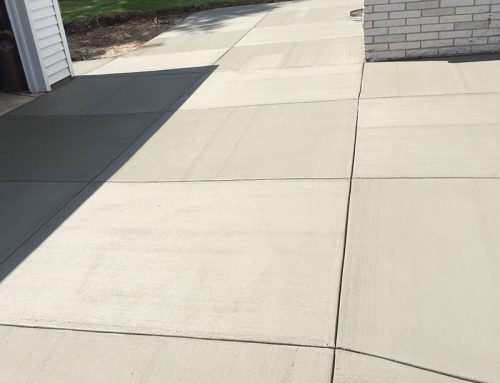
Control joints are placed in the slab to guide where shrinkage cracks may happen. Concrete often shrinks as it cures. A control joint creates a planned line where that movement can occur instead of letting a random crack run across the patio.
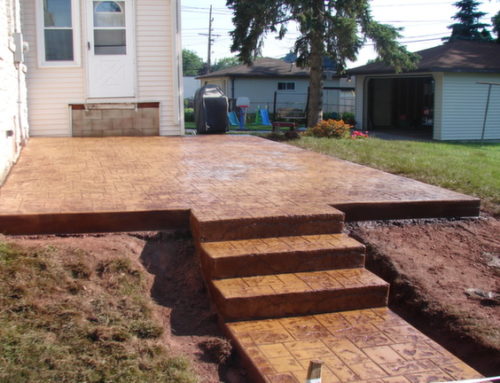
Expansion joints, often called isolation joints, separate the patio from other fixed surfaces. These may be used where the patio meets the house, steps, a walkway, a driveway, or another slab. The goal is to let each surface move a little on its own.
Here is the simple difference:
- Control joints guide cracking within the patio slab.
- Expansion joints separate the patio from other structures or slabs.
- Both help reduce pressure that can lead to unwanted cracking.
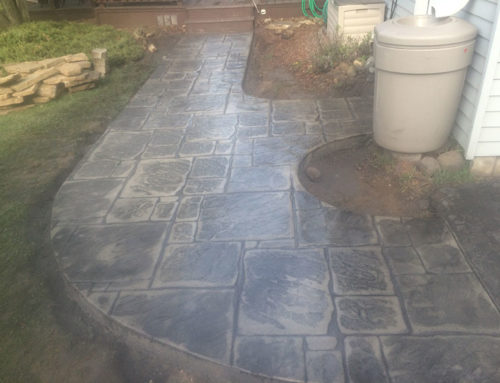
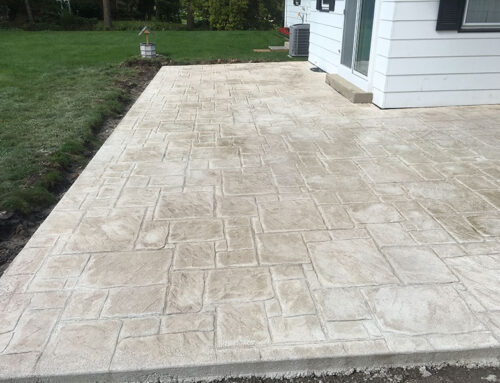
This is also where design matters. A patio with curves, borders, stamped concrete, or colored concrete still needs smart joint placement. The finished patio should look clean, but it also needs the right lines to perform well.
Does Reinforcement Stop Patio Cracking?
Reinforcement can help hold a slab together, but it does not stop concrete from moving. This is a common misunderstanding.
Wire mesh, rebar, or fiber reinforcement may be used depending on the patio design and site conditions. These materials can help reduce separation if small cracks occur. They can also add support within the slab. Still, reinforcement works best when it is paired with a stable base, proper thickness, correct joint layout, and good drainage.
For a typical backyard patio, the full system matters more than a single material. A thicker slab with poor drainage can still have problems. A reinforced slab with a weak base can still settle. The best result comes from paying attention to every step.
When Patio Slab Planning Matters Most
This matters when you are adding a new patio, replacing an old patio, or changing how you use your backyard. It is especially important if the patio will hold furniture, a grill, planters, or frequent foot traffic.
You should pay close attention to slab planning if:
- Your yard holds water after rain.
- The patio will be near the house foundation.
- You have downspouts close to the patio area.
- The yard has a slope or uneven grade.
- You want a larger patio for seating or entertaining.
- You are choosing stamped, colored, or bordered concrete.
- Your existing outdoor space feels uneven or hard to use
This may not be as involved for a very small, simple slab in a flat, well-drained area. Even then, the basics still matter. Concrete is long-lasting when the project is planned correctly from the ground up.
Who Benefits Most From a Well-Built Concrete Patio Slab?
Concrete patios are a good fit for homeowners who want a clean, usable outdoor space without constant upkeep. They are common for backyards, grilling areas, walk-out basement spaces, side-yard seating areas, and outdoor dining spots.
A concrete patio may be right for you if you want:
- A stable place for patio furniture
- A cleaner area for grilling or outdoor meals
- A finished space outside a back door or sliding door
- A backyard upgrade that feels practical and polished
- A patio shape that works with your home and lawn
- Decorative options like stamped concrete, colored concrete, or borders
Concrete is trusted for patios because it creates a firm surface that can be shaped to fit the property. It can be simple and traditional, or it can include decorative details that make the outdoor space feel more finished.
At JBS Construction, we help homeowners think through the details before the work begins. That includes the patio size, shape, grade, drainage, finish, and how the space will be used day to day.
Build a Patio That Holds Up in Milwaukee
Concrete slabs for patios perform best when they are built with the right base, drainage, joints, thickness, and finish. The visible surface matters, but the planning underneath the slab is what helps reduce cracking and shifting over time.
If you are planning a new concrete patio in Milwaukee or the surrounding area, JBS Construction can help you create an outdoor space that fits your home and holds up to local conditions. Contact us today to request a free estimate for your concrete patio project.