
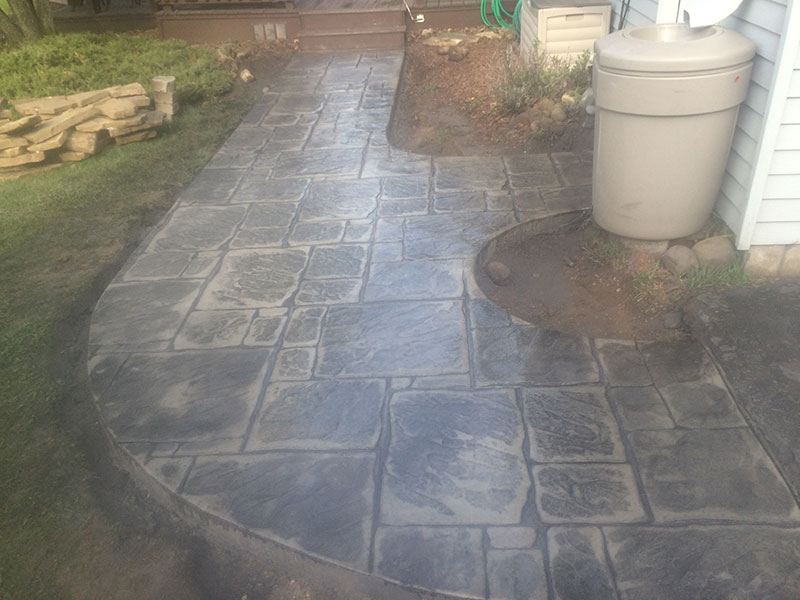
You may like the look of a stamped stone patio in one photo and a brick pattern in another, but that does not tell you which one will look right behind your house. Patio size, siding or masonry, nearby walkways, landscaping, and even where you place furniture can change how a pattern feels once it covers an entire surface.
At JBS Construction, we help homeowners planning new and replacement patios in Milwaukee and surrounding area communities sort through those details before installation. The best concrete patio patterns are not necessarily the most detailed ones. They are the patterns that make sense with the size, shape, and surroundings of the patio.
What Concrete Patio Patterns Can Homeowners Choose?
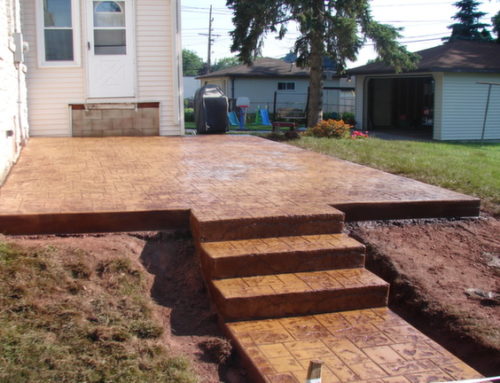
Common concrete patio patterns include stamped designs that resemble stone, slate, brick, and cobblestone. Homeowners can also combine pattern, color, and decorative borders to make certain areas stand out or keep the overall design more restrained.
The right choice depends on the home and patio layout. A pattern that works across a large open patio may feel too busy in a smaller space with several nearby design features.
Which Concrete Patio Patterns Fit Different Home Styles?
Start by looking at the materials that are already visible from the patio.
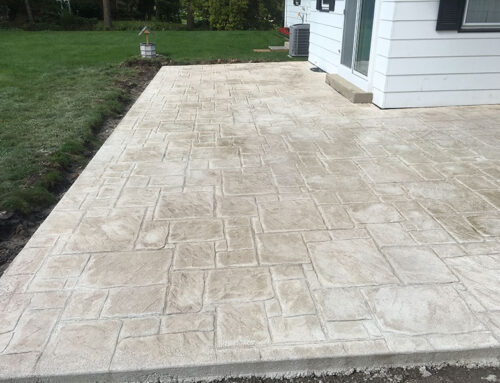
If your home has stone details, a stone- or slate-inspired stamped surface can create a visual connection between the house and backyard. Homes with brick exteriors or brick accents may work well with a more regular brick-inspired pattern. Cobblestone can create another structured option when you want individual shapes and joints to be more noticeable.
JBS offers stamped concrete that can recreate the appearance of materials such as stone, slate, brick, and cobblestone while remaining a poured concrete surface.
You do not have to match the house exactly. In fact, copying every existing material can make a backyard feel overly coordinated. It can be more useful to identify one element you want the patio to relate to, such as exterior brick, a stone retaining wall, or the color family used around the home.
Pattern scale deserves attention too. A large, irregular stone design has more visual movement than a simpler repeating pattern. That can work well across an open patio, but a smaller space surrounded by landscaping, railings, furniture, and other details may benefit from something quieter.
Should You Stamp the Whole Patio or Use a Border?
A full stamped surface and a decorative border solve different design problems.
Stamping the entire patio makes the texture and pattern one of the main features of the backyard. This can work well when the patio is relatively open and the homeowner wants the concrete itself to carry more of the design.
A border creates definition without putting the same level of detail across every square foot. JBS installs decorative concrete with options that include stamping, color, and borders.
Think about a rectangular patio with a dining table in the center. A contrasting perimeter can frame the patio while leaving the central area simpler. On a larger patio, borders or changes in finish may also help visually organize the space without physically dividing it.
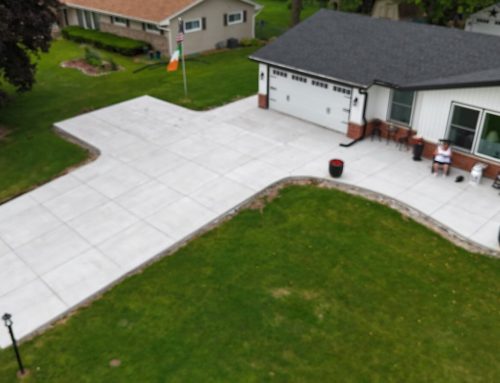
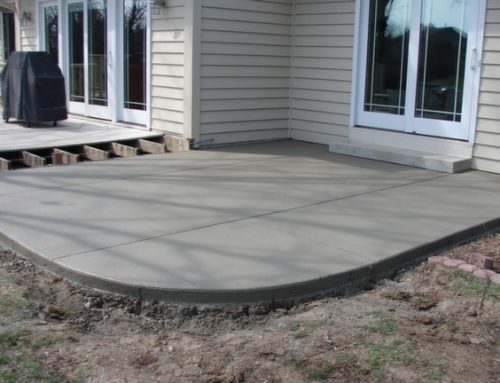
The shape of the patio can influence this decision. JBS can install patios with straight, curved, rounded, and other layouts. A border following a curved edge creates a different effect than the same border around a basic rectangle.
This is why choosing the pattern before settling the full layout can be useful. Shape, border, color, and surface pattern affect one another.
How Much Does Color Change the Look of a Pattern?
Two patios stamped with a similar pattern can look noticeably different when the color changes.
Color influences how easily you notice the shapes, joints, and texture across the surface. More contrast can call attention to the individual parts of the pattern. A subtler color combination can keep the texture visible without making it the first thing you notice from across the yard.
That makes color especially important when the house already has several exterior finishes. If you have brick, siding, stone, painted trim, and extensive landscaping visible from the patio, adding another strong color may create more visual competition than you want.
Concrete itself gives contractors several ways to create decorative surfaces. The American Cement Association identifies color, texture, stamping, scoring, rolling, and inlaying among established decorative finishes used with concrete.
For a homeowner, the practical question is simpler: Do you want people to notice the patio pattern immediately, or do you want it to sit more quietly behind the furniture, landscaping, and rest of the backyard?
When This Matters: Decide Before a New Patio or Replacement
Pattern decisions matter when you are installing new concrete or completely replacing an existing patio because that is when you can reconsider the full space instead of simply recreating what was there before.
Suppose your current patio is too small for a dining table and grill. If you are replacing it with a larger surface, copying the old pattern and shape may no longer make sense. The expanded patio could benefit from a different border, pattern scale, or shape based on how the new area will be used.
The same applies if other exterior work is planned. A patio that will meet a new walkway, landscaping, steps, or another concrete surface should be considered in that larger layout. The transition between those areas can be just as noticeable as the patio itself.
Wisconsin’s changing seasons are another reason not to let appearance become the only consideration. Decorative treatments change what the surface looks like, but the project still depends on proper site preparation, layout, placement, and curing. Pattern choice comes after the basic installation requirements have been addressed.
Who Should Consider a Decorative Concrete Patio?
Decorative concrete is worth considering when you want the patio to contribute to the design of the backyard rather than function only as a basic paved area.
It can make sense when you are expanding an outdoor dining space, redesigning landscaping around a patio, changing an older rectangular layout, or replacing plain concrete with something that relates more closely to the home’s exterior.
It can also make sense when you like the visual character of stone or brick but want a poured concrete patio. JBS offers patio options ranging from traditional concrete to colored, stamped, bordered, and shaped designs.
Decorative details are not necessary for every project. If your backyard already has several strong visual features or you prefer a simple surface, traditional concrete may make more sense. Choosing fewer design elements can be just as intentional as choosing a detailed stamped pattern.
Choose Concrete Patio Patterns That Fit Your Backyard
Concrete patio patterns should be chosen in context, not from a sample by itself. Look at the size and shape of the patio, materials on the house, nearby concrete, landscaping, planned furniture, color, and how much attention you want the surface to draw.
If you are considering a new or replacement patio in Milwaukee and surrounding area communities, JBS Construction can help you find the right balance between what you want for your backyard and what works well for your property. Contact us to request a free estimate and talk through your patio ideas and decorative options.