
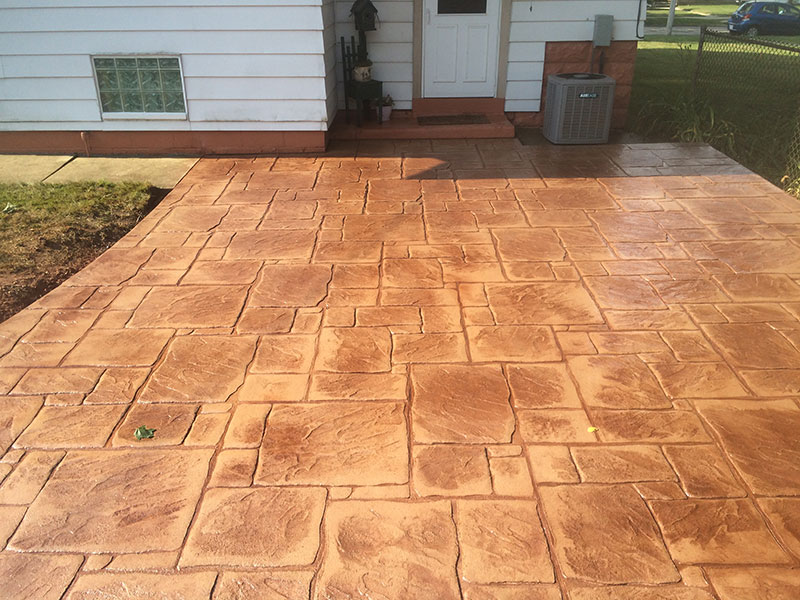
A backyard can be tricky to plan when the space is narrow, oversized, uneven, or already filled with landscaping. You may know you want a better place to grill, sit outside, or spend time with family, but the layout is what makes the patio work day after day.
At JBS Construction, we help homeowners plan and install backyard concrete patios throughout the Milwaukee area and beyond. Whether the yard is small, large, sloped, or somewhere in between, the right patio layout can make the space feel more useful, more comfortable, and easier to enjoy.
What Is the Best Backyard Concrete Patio Layout?
The best backyard concrete patio layout depends on the yard’s size, slope, drainage, and main use. A small yard often needs a simple and efficient patio shape, while a large yard can support separate areas for dining, seating, grilling, or a fire feature. A backyard concrete patio should feel connected to the home, leave room for safe movement, and be planned around water flow, yard grade, and Wisconsin weather.
How Should a Small Yard Patio Be Laid Out?
A small backyard patio works best when every part of the slab has a clear purpose. Instead of trying to fit too much into the space, focus on one or two main uses. For many homeowners, that may be a small dining area, a grill space, or a seating corner where the patio connects directly to the back door.
In many Milwaukee-area homes, placing the patio near the house keeps the layout simple and useful. It also makes it easier to carry food, drinks, cushions, or yard supplies outside. A rectangular shape often works well, but a curved edge can help soften the look when the patio sits near landscape beds or garden areas.
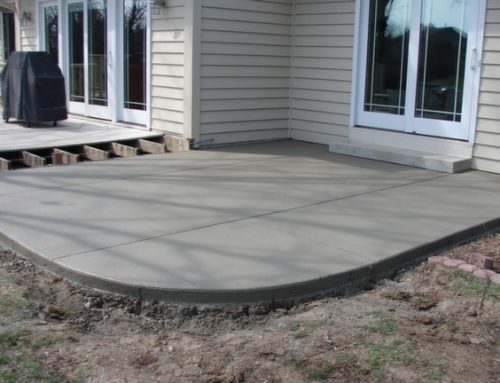
Small yards also benefit from clean edges and smart spacing. The patio should leave enough room for furniture, foot traffic, and safe movement around a grill without crowding the rest of the yard. A concrete border can also help the patio feel more finished without adding too much extra square footage.
When the yard is smaller, details matter more. The shape, finish, and placement all need to work together so the patio feels useful instead of squeezed into the space.
What Layout Works Best for a Large Backyard?
A large backyard gives you more freedom, but it also needs more planning. Without a clear layout, a big patio can feel empty or disconnected from the rest of the yard.
For larger yards, it often helps to think in activity zones. One part of the patio may sit closer to the kitchen for outdoor meals. Another section may be used for lounge seating, a fire feature, or a quieter area that faces the yard. This gives the patio more purpose and helps the space feel natural instead of oversized.
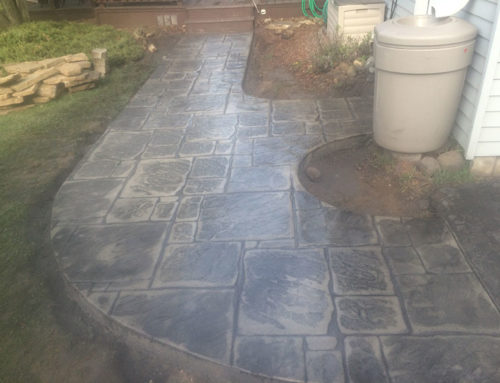
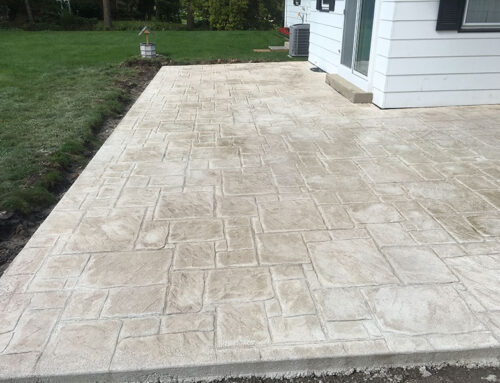
Stamped or colored concrete can also help a larger patio feel more finished. A plain slab may work well for a simple design, while stamped concrete can give the patio more texture and visual interest. Concrete borders can also help define different areas without making the layout feel too busy.
A large patio should still feel balanced. Bigger is not always better if the shape does not match the home, yard, or daily use. A well-planned patio gives you enough room to enjoy the backyard without taking over the whole outdoor space.
How Do Sloped Yards Change Patio Planning?
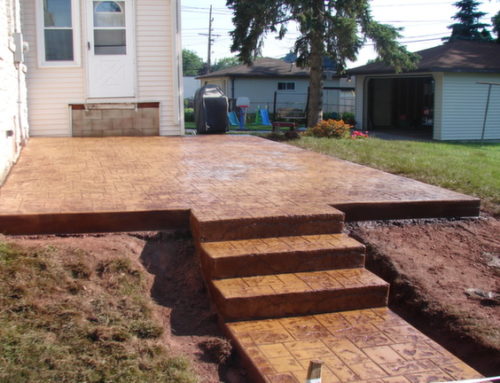
A sloped yard needs extra attention before any patio layout is chosen. The grade affects water movement, slab placement, steps, and how the patio connects to the rest of the yard.
In Wisconsin, drainage is especially important because rain, snow, and freeze-thaw cycles can all affect outdoor concrete. A patio should be planned so that water moves away from the house and does not pool on the surface. This is one reason layout and site preparation matter as much as the final look.
Some sloped yards work well with a patio placed near the most level part of the property. Others may need a smaller patio with steps or a layout that creates a smooth transition from the home to the lawn. In many cases, it is better to work with the natural grade instead of trying to force a layout that does not fit the yard.
A sloped yard does not mean a concrete patio is off the table. It just means the layout needs to be planned with the grade, drainage, and access points in mind.
Should You Choose Brushed, Colored, or Stamped Concrete?
The finish should support the layout, not compete with it. A simple brushed concrete patio works well for homeowners who want a clean, practical surface. It is a strong choice for grilling areas, everyday seating, and patios that need to blend into the yard without drawing too much attention.
Stamped concrete works well when the patio is meant to feel more decorative. It can help define a seating area, make a large patio feel more designed, or add character near a garden, pool area, or outdoor dining space. Colored concrete can also help the patio connect with the home’s siding, trim, brick, or landscape design.
A smaller yard may look better with a cleaner finish and a simple border. A large yard may have room for stamped concrete or separate finish areas. A sloped yard may need the finish to support safe movement and clear transitions from one part of the yard to another.
The right choice depends on how the patio will be used, how visible it is from the home, and how much detail the homeowner wants in the finished space.
When Patio Layout Planning Matters Most
Patio layout matters most when the yard has limits or the homeowner has a clear use in mind. If the backyard is small, a poor layout can make it feel even tighter. If the yard is large, the patio can feel unfinished without a plan. If the yard slopes, the wrong placement can create drainage issues or awkward transitions.
This type of planning is especially helpful when you want a better place to grill, eat outside, relax, or create a cleaner connection between the house and yard. It also matters when the patio needs to work around a hill, an existing landscape bed, a walkway, or a future outdoor living feature.
For a very small utility pad or a basic surface near a side yard, a detailed layout may not be as important. For a true backyard concrete patio, though, the layout helps the finished space feel useful from the first day.
Who Gets the Most Value From a Well-Planned Patio?
Homeowners who use their backyard often get the most value from planning the patio layout before installation. This includes families who host cookouts, homeowners who want a quiet sitting area, and people who want a stronger connection between the house and yard.
A well-planned concrete patio can also help when the yard has an unusual shape. Narrow backyards, walkout doors, sloped lawns, and existing landscaping all affect how the space should be designed. The right layout makes room for furniture, grilling, and foot traffic without making the backyard feel crowded.
The best patio layout is not always the largest one. It is the one that fits the home, the yard, and the way the homeowner wants to spend time outside.
Why Concrete Patios Are a Trusted Choice for Outdoor Living
Concrete is commonly used for patios because it creates a strong, stable surface for outdoor living. It can be shaped for simple or custom layouts, finished in several ways, and planned to work with the home’s exterior.
For homeowners in the Milwaukee area, concrete is also a practical choice because patios need to handle changing seasons. Snow, rain, summer heat, and freeze-thaw cycles all make proper installation important. A patio needs the right base, slope, thickness, and finish so it can hold up to regular use.
A patio is not just a slab outside the back door. It becomes part of how the home works. That is why the shape, pitch, finish, and placement should all be considered before the concrete is poured.
Let’s Plan a Backyard Concrete Patio That Fits Your Yard
A backyard concrete patio should make your outdoor space easier to use, not harder to manage. Small yards need smart use of space. Large yards need clear areas for different activities. Sloped yards need careful planning around grade, drainage, and access.
At JBS Construction, we install backyard concrete patios throughout the Milwaukee area, focusing on the details that affect daily use, long-term performance, and the finished look of the space. If you are ready to create a patio that fits your home and yard, contact our team to request a free estimate and start planning your project.