
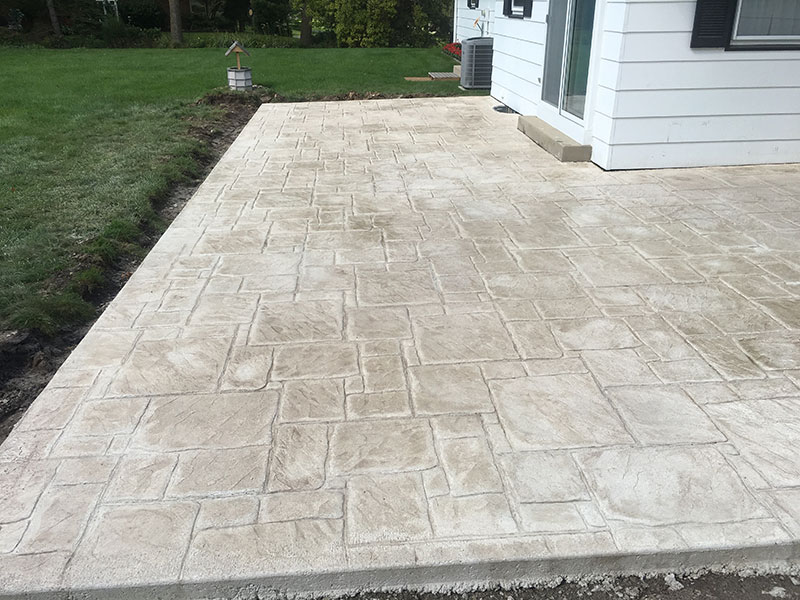
A backyard should give you a comfortable place to eat, relax, and spend time with family. It should not leave you with another long list of seasonal chores.
For homeowners in Milwaukee and the surrounding areas, a concrete backyard patio offers a practical mix of durability, design flexibility, and manageable upkeep. JBS Construction plans each patio around the home, yard, drainage, and the way the homeowner wants to use the space.
Why Is Concrete a Practical Patio Choice?
Concrete is a practical choice for a backyard patio because it creates a solid, level surface that is easy to clean and works with many outdoor layouts. Homeowners can choose from different shapes, finishes, colors, and decorative patterns while getting a surface suited for Wisconsin’s changing weather.
Why Is Concrete a Smart Backyard Patio Material?
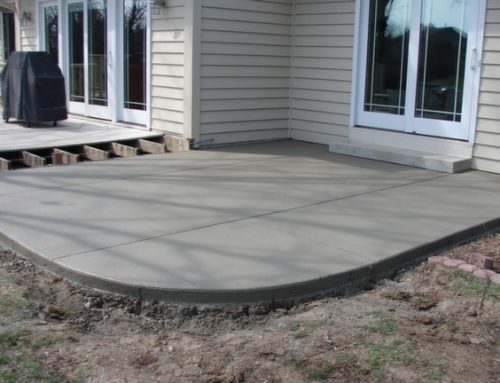
Concrete gives homeowners the flexibility to create an outdoor space that fits their property. It can be poured in simple rectangular layouts or shaped around landscaping, walkways, doors, and other backyard features. A concrete surface also supports common patio items without creating an uneven setup. Dining tables, grills, planters, outdoor furniture, and fire features all benefit from a stable base. This makes it easier to arrange the space and change the layout later.
Maintenance is another reason many homeowners choose concrete. A patio can usually be kept clean with regular sweeping and occasional washing. Periodic sealing may also help protect the finish and make stains easier to manage.
Concrete does not have individual boards that need staining or separate units that may shift over time. Homeowners looking for a straightforward outdoor surface can review our patio installation options to see how concrete can fit different homes and yard sizes.
How Does Concrete Handle Milwaukee Weather?
Patios in southeastern Wisconsin face hot summer days, heavy rain, snow, freezing temperatures, and spring thaws. These seasonal changes affect both the patio surface and the soil below it.
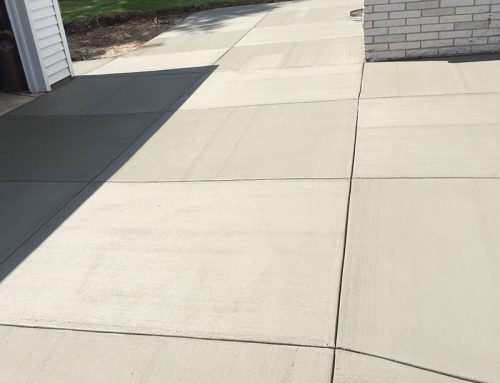
Good performance starts before the concrete is poured. The area must be excavated to the proper depth, and the base needs to be prepared for the soil and site conditions. The patio should also have enough slope to move water away from the house. Control joints are placed to manage natural movement within the concrete. Proper finishing and curing are also important because concrete needs time to gain strength after placement.
Site planning is especially important in yards where water collects after rain or snowmelt. A patio should not direct runoff toward the foundation or create a low area next to the house. Looking at drainage, downspouts, yard slope, and nearby landscaping helps create a layout that works with the property.
Concrete vs. Pavers and Wood
Concrete, pavers, and wood can all create useful outdoor spaces. The best choice depends on the home, yard, budget, and amount of maintenance the homeowner wants to manage.
Pavers provide many color and pattern choices. However, they are installed as individual pieces with joints between them. Those joints can collect weeds, and the units may shift when the ground moves through Wisconsin’s freeze-and-thaw cycles.
Wood is often used for raised decks, especially when a back door sits well above ground level. Wood surfaces usually require regular cleaning, staining, or sealing. Individual boards may also wear at different rates.
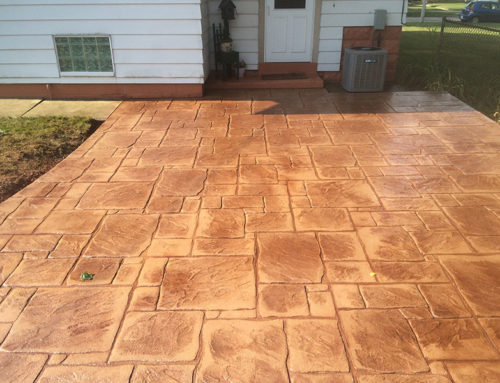
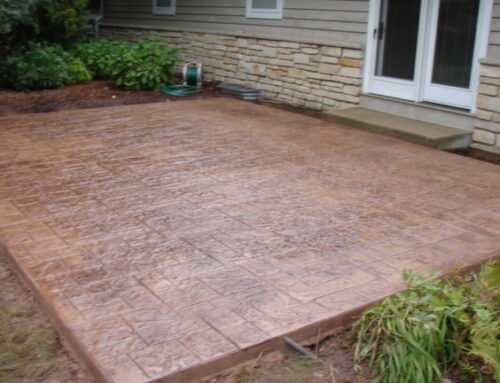
Concrete is often the easier choice for a ground-level space. It provides one continuous surface and can be finished in several ways. Homeowners who want more visual detail can explore decorative concrete finishes, including stamped patterns, color options, and borders.
A deck may still be the better choice for a steep yard or elevated doorway. Pavers may appeal to homeowners who want individual units and a specific jointed appearance. Concrete works well when the goal is a solid surface with flexible sizing and fewer routine maintenance steps.
When This Choice Matters Most
A concrete patio makes sense when you want to use the backyard regularly. It provides space for weeknight dinners, weekend cookouts, birthday parties, outdoor games, or quiet evenings at home. It is also useful when you want the patio to connect different areas of the property. The layout can meet a walkway, lead toward a garage, follow the back of the house, or create a clear path to a garden.
Planning becomes even more important when the project may include an outdoor kitchen, pergola, steps, fire feature, or built-in seating. Thinking about these additions early helps determine the right size and placement. It can also prevent the patio from feeling crowded once furniture and other items are added.
Homeowners with small yards may benefit from a simple shape that uses the available space efficiently. Larger properties may have room for separate dining and seating zones. Families with children may want open space for outdoor activities, while homeowners who entertain may need room for tables, grills, and serving areas.
The City of Milwaukee’s current permit checklist states that a standard patio does not require a building permit. Other project features may have separate requirements, and rules can differ in surrounding municipalities. Homeowners should check local requirements before construction begins.
Plan a Patio That Fits Your Home
Concrete is an easy choice when you want a backyard patio that is stable, versatile, and simple to care for. The right size, placement, finish, and drainage plan can create a space that feels like a natural part of the property.
JBS Construction installs concrete patios for homeowners throughout Milwaukee and the surrounding areas. We take the time to understand how you want to use the space before planning the layout and details. Request an estimate to start discussing your new patio.