
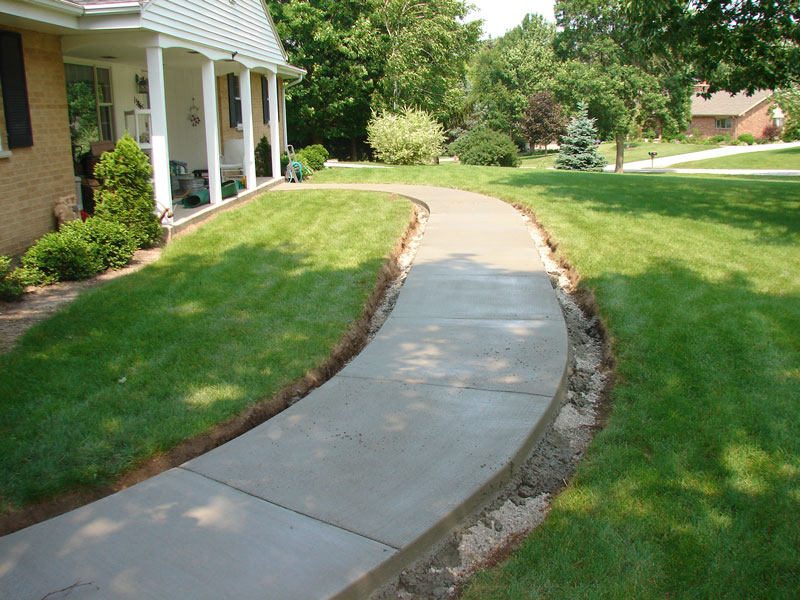
Does the path to your front door become slippery after snow on the patio? These small problems can make a yard harder to use and leave mud, worn grass, and uneven surfaces around the home.
A well-planned concrete walkway gives people a stable path between the areas they use most. For homeowners in Milwaukee and the surrounding areas, the right layout can also make snow removal easier, direct water away from key areas, and create a cleaner connection between the home and yard.
What Makes a Concrete Walkway Safer?
A concrete walkway creates a continuous, stable surface for reaching an entrance, patio, garage, or side yard. Its safety depends on the route, width, slope, drainage, and surface texture. A good plan accounts for how people move through the property during dry weather, rain, snow, and freezing conditions.
Where Should a Walkway Go to Solve Daily Problems?
The best walkway location is usually based on daily habits rather than appearance alone. Before choosing a route, think about where people already walk and which areas become wet, muddy, or difficult to reach.
Create a Direct Route to the Front Entrance
A front walkway should guide visitors from the driveway or public sidewalk to the main entrance without sharp turns or unnecessary steps. A direct route is easier to follow at night and gives homeowners a clear area to shovel after snowfall.
The walkway should also meet the porch, steps, or driveway at a comfortable transition. Awkward height changes can create places where people catch a foot or where water collects and freezes.
Make Side Yards Easier to Access
Side yards often become narrow travel lanes between the driveway and backyard. Homeowners may use them to move garbage bins, lawn equipment, bicycles, or grilling supplies.
A concrete path can keep this area usable when the ground is wet. It can also create a cleaner route around air-conditioning units, utility meters, gates, and downspouts without forcing people to walk through mud or landscaping.
Connect the Home to the Patio
A patio is more useful when it has a clear connection to the house, driveway, or garage. Without a planned path, repeated foot traffic can wear down the lawn and carry dirt onto the patio. A walkway can be installed as part of a new sidewalk installation or planned alongside a patio project. Looking at both surfaces together helps create smoother transitions and a layout that fits how the backyard will be used.
Which Design Choices Make a Walkway Easier to Use?
Walkway design affects how the path feels underfoot, how easily it can be cleared, and how well it fits the rest of the property. A few practical choices can make a major difference.
Choose a Width Based on Traffic
A narrow path may work for occasional access to a shed or utility area. A main entrance may need more room for two people, packages, strollers, or mobility devices. Homeowners should think about who uses the walkway and what they may carry. A route that feels wide enough during planning is less likely to feel crowded once landscaping, railings, or snow piles take up space along the edges.
Plan for Water and Snow
A walkway should direct water away from the home and avoid low spots where puddles can form. Standing water may turn into ice during Milwaukee’s colder months, making the path harder to use. The surrounding grade, downspouts, patio edges, and driveway slope should all be reviewed before concrete is poured. Water problems are easier to address during planning than after the walkway is installed.
Use a Surface With Traction
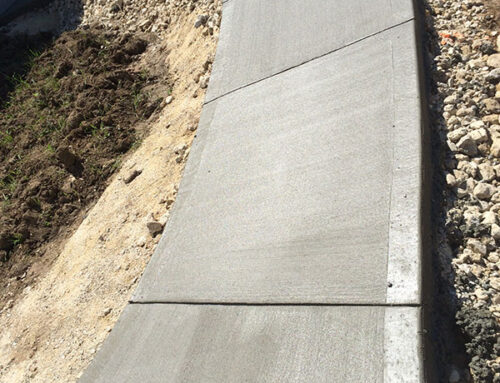
A traditional broom finish adds light texture to the surface. This is a common choice for residential sidewalks because it offers practical traction and a clean appearance.
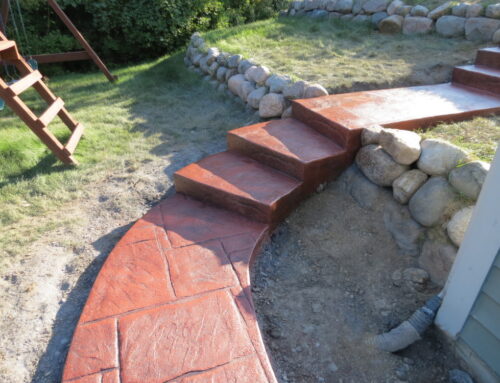
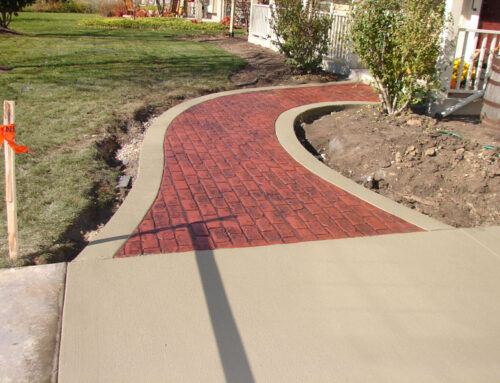
Homeowners who want more visual detail can explore decorative concrete options. Borders, color, and stamped patterns can help a walkway coordinate with a patio, driveway, or home exterior. The finish should still fit the path’s daily use and exposure to rain, snow, and ice.
Keep Curves Purposeful
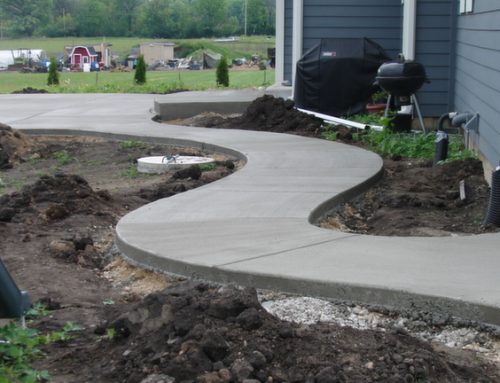
Curved paths can work well around gardens, trees, or sloped areas. However, too many turns can make the route longer and harder to clear. A curve should have a reason, such as avoiding an existing landscape feature or creating a more comfortable connection between two surfaces. For high-traffic routes, a direct or gently curved walkway is often the most practical choice.
Concrete Walkway vs. Pavers or Stepping Stones
Concrete, pavers, and stepping stones can all create paths, but they serve different needs. Concrete provides a continuous surface with few gaps. It is often easier to shovel, roll bins across, and use with strollers or wheeled equipment. It also works well for main entrances and frequently used routes.
Pavers offer many patterns and colors, but the joints may collect weeds or shift as the ground moves. They can be a good fit when individual pieces may need to be lifted for access beneath the path. Stepping stones work best as a decorative route through a garden or low-traffic area. The gaps between stones may be less convenient for everyday entrances, snow removal, or moving items through the yard.
The best choice depends on how often the path will be used, who will use it, and how much seasonal upkeep the homeowner wants.
When This Matters Most
A new walkway may be worth considering when family members or guests regularly walk across grass, when an entrance becomes icy, or when a patio has no clear connection to the house. It can also help when an old layout no longer matches how the property is used.
This type of project is especially useful for homes with narrow side yards, detached garages, backyard gates, or frequently used secondary entrances. It may also make sense when a homeowner is replacing a driveway or installing a patio and wants the surfaces planned together.
A concrete path may not be needed for a rarely used garden route where stepping stones would work just as well. Homeowners should also check local rules when work is near a public sidewalk or right-of-way. The City of Milwaukee’s permit checklist notes that private-property sidewalks generally do not require a permit, while work on a sidewalk in front of a home may require approval. Rules can differ in nearby communities.
Build a Better Route Through Your Yard
A concrete walkway should do more than fill space between two areas. It should make entrances easier to reach, reduce worn paths through the lawn, and create practical connections between the home, side yard, driveway, and patio.
JBS Construction installs concrete walkways for homeowners throughout Milwaukee and the surrounding areas. We take the time to review the property, discuss how the path will be used, and plan the details that affect daily use. To start planning your project, request an estimate from JBS Construction.